Genealogy
Regimental Genealogy
The Regiment’s record of historical lineage
Perpetuations
Perpetuation ensures that the history and legacy of a military unit such as a regiment, battalion, or company, continues to be recognized and remembered even after the unit is no longer active, after it has been disbanded or deactivated.
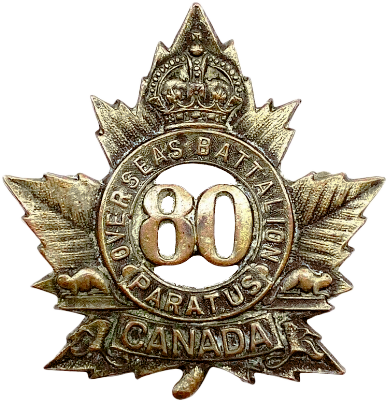
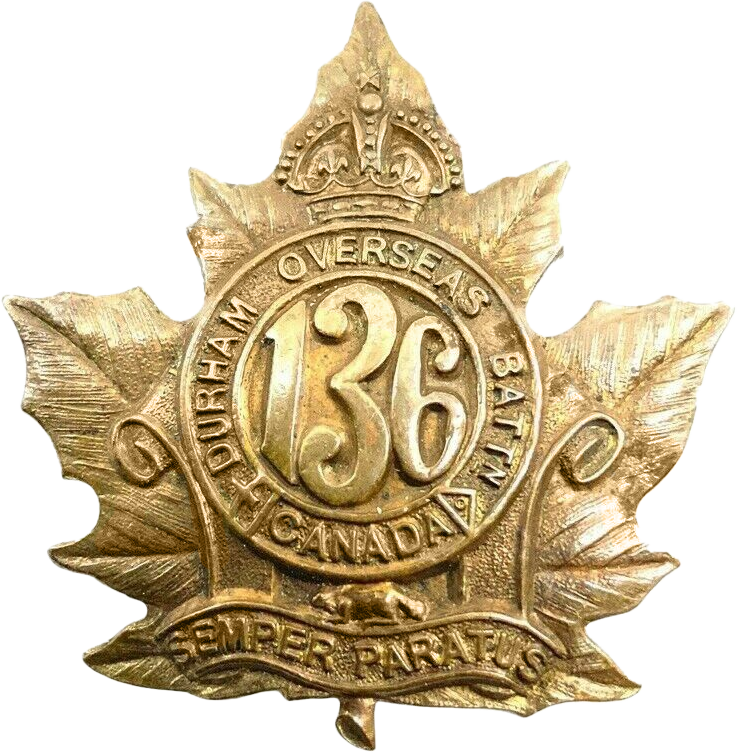
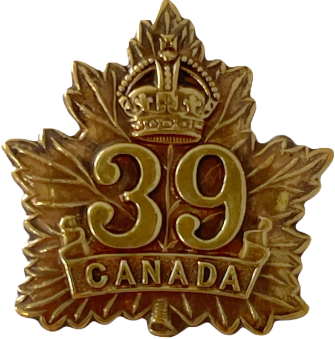
War of 1812
1st Regiment of Durham Militia
1st Regiment of Hastings Militia
1st Regiment of Northumberland Militia
1st Regiment of Prince Edward Militia
Regimental Affiliation
Royal Sussex Regiment
In 1934, His Majesty King George V approved the alliance of the Hastings and Prince Edward Regiment with the Royal Sussex Regiment in response to the considerable efforts by the Commanding Officer, LCol AV (Tiny) Yates. As a result, the Regiment was granted the privilege of donning the regal colours of royal blue and old gold, emblematic of the esteemed British Regiment, and it acquired the cherished anthem "Sussex by the Sea."
The history of the Royal Sussex predates the Hastings and Prince Edward Regiment by a century. The 35th Regiment of Foot, as it was known was raised in 1701 in Belfast, Ireland by the 3rd Earl of Donegal in support of William III of Orange – hence the colour, since changed to gold. The 35th moved to Cadiz in 1702 and then fought in campaigns in the West Indies, Gibraltar, the Seven Years War, Malta, Egypt and was part of the ill-fated garrison of Fort William-Henry in 1756.
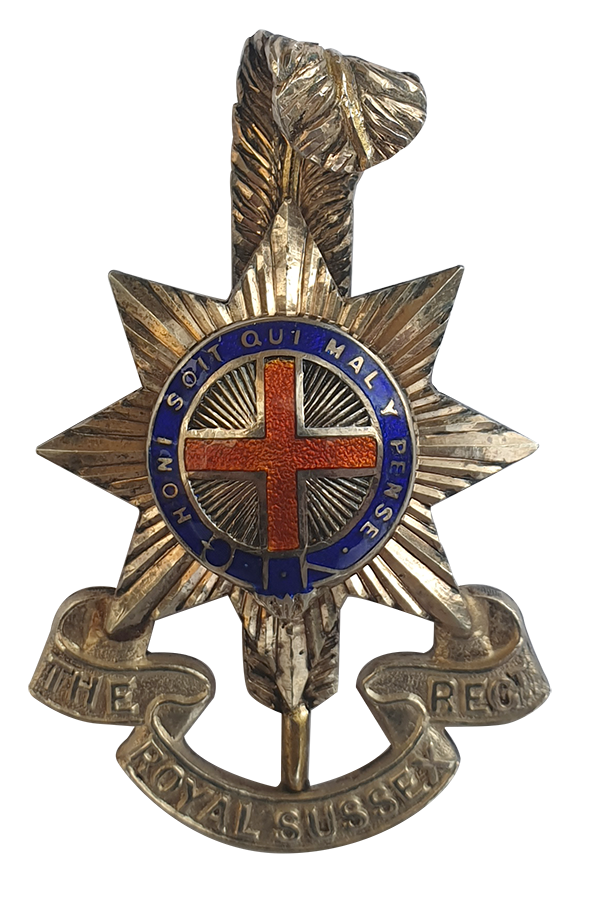
Noteworthy achievements include participation in the capture of Louisburg and its pivotal role at the right flank of the line in Quebec, opposite the renowned French Royal Ruoussillan Regiment, during Wolfe's historic victory in 1759 over Montcalm – the plumes taken from the French soldiers’ hats are still part of the Royal Sussex badge. It served in the South African War and raised no less than 23 battalions for the First World War. During the Second World War it saw service in France in 1940, Abyssinia, the Western Desert, North Africa, Italy and Burma.
Most recently as part of a realignment of the British Army, the Royal Sussex has become the 3rd Battalion of the Queen’s Regiment (Royal Sussex). In 1993 the Queen’s Regiment was amalgamated to become the Princess of Wales’s Royal Regiment (Queen’s and Royal Hampshire’s).
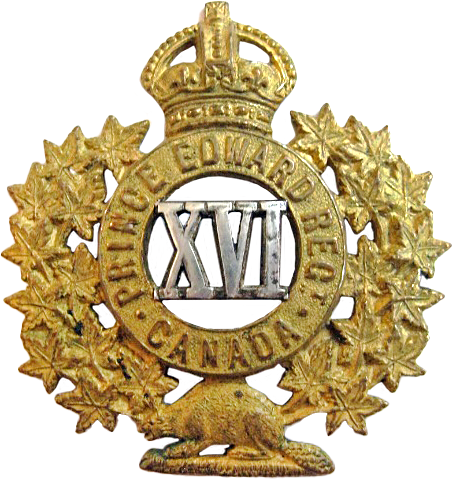
The 16th Battalion Volunteer Militia (Infantry) Canada
Originated 6 February 1863 in Picton, Ontario as the 16th Battalion Volunteer Militia (Infantry) Canada
Redesignated 30 November 1866 as the 16th Prince Edward Battalion of Infantry
Redesignated 8 May 1900 as the 16th Prince Edward Regiment
Amalgamated 12 March 1920 with the 49th Regiment Hastings Rifles to form The Hastings and Prince Edward Regiment
Redesignated 7 November 1940 as the 2nd (Reserve) Battalion, The Hastings and Prince Edward Regiment
Redesignated 1 November 1945 as The Hastings and Prince Edward Regiment
Amalgamated 1 September 1954 with the 9th Anti-Tank Regiment (Self Propelled), RCA, the 34th Anti- Tank Battery (Self Propelled), RCA, and The Midland Regiment.
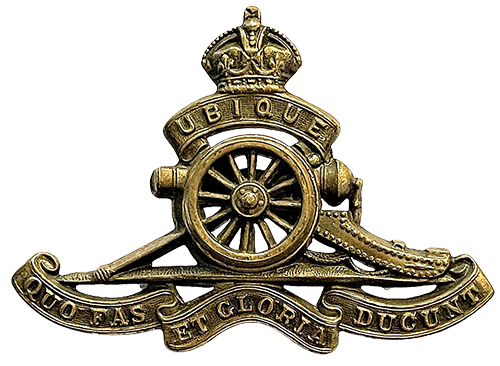
9th Anti-Tank Regiment (Self-Propelled) (Argyll Light Infantry), RCA
Originated 16 January 1863 in Belleville, Ontario as the 15th Battalion Volunteer Militia (Infantry) Canada
Redesignated 2 June 1871 as the 15th Battalion or the Argyll Light Infantry
Redesignated 8 May 1900 as the 15th Regiment Argyll Light Infantry
Redesignated 12 March 1920 The Argyll Light Infantry
Redesignated 15 December 1936 as The Argyll Light Infantry (Tank)
Redesignated 7 November 1940 as The (Reserve) Argyll Light Infantry (Tank)
Amalgamated 1 April 1946 with the 44th (Reserve) Field Regiment, RCA, converted to artillery, and redesignated as the 9th Anti-Tank Regiment (Self-Propelled) (Argyll Light Infantry), RCA
Amalgamated 1 September 1954 with the 34th Anti-Tank Battery (Self Propelled), RCA, with the Hastings and Prince Edward Regiment and with The Midland Regiment, converted to infantry, and redesignated as The Hastings and Prince Edward Regiment.
The 44th (Reserve) Field Regiment, RCA
Originated 1 June 1905 in Gananoque, Ontario, as the 9th Brigade, Canadian Field Artillery
Redesignated 1 July 1925 as the 9th Field Brigade, Canadian Artillery
Redesignated 3 June 1935 as the 9th Field Brigade, RCA
Redesignated 7 November 1940 as the 9th (Reserve) Field Brigade, RCA
Redesignated 24 June 1942 as the 44th (Reserve) Field Regiment, RCA
Amalgamated 1 April 1946 with The (Reserve) Argyll Light Infantry (Tank)
The 34th Anti-Tank Battery (Self-Propelled), RCA
Originated 1 April 1912 in Belleville, Ontario, as the 34th Battery, CFA
Redesignated 1 July 1925 as the 34th Field Battery, CA
Redesignated 3 June 1935 as the 34th Field Battery, RCA
Redesignated 7 November 1940 as the 34th (Reserve) Field Battery, RCA
Redesignated 1 April 1946 as the 34th Anti-Tank Battery (Self-Propelled), RCA
Amalgamated 1 September 1954 with the 9th Anti-Tank Regiment (Self Propelled), RCA, with the Hastings and Prince Edward Regiment and with The Midland Regiment.
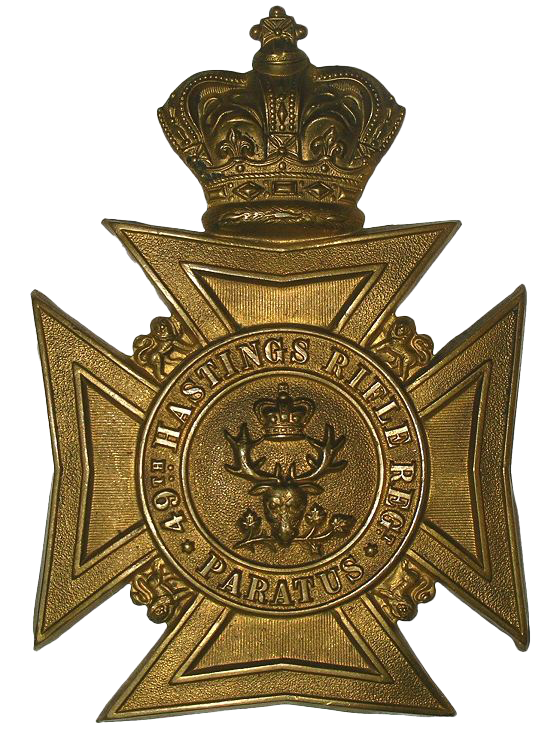
The 49th Regiment Hastings Rifles
Originated 14 September 1866 in Stirling, Ontario, as the 49th Hastings Battalion of Infantry
Redesignated 6 April 1871 as the 49th Hastings Battalion of Rifles
Redesignated 8 May 1900 as the 49th Regiment Hastings Rifles
Amalgamated 12 March 1920 with the 16th Prince Edward Regiment
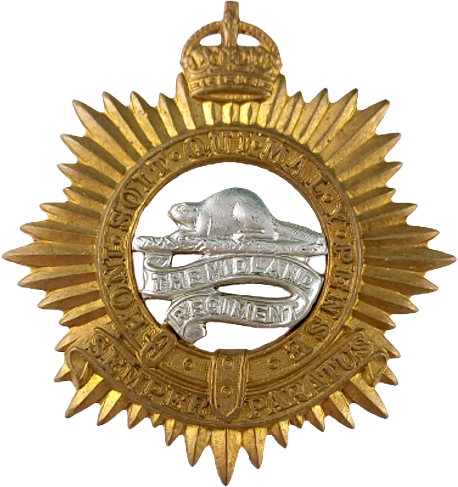
The Midland Regiment
24 January 1856 No 1 Rifle Company was organized in Cobourg.
No 2 Infantry Company was organized in Cobourg on 06 February 1863, with similar companies following in Campbellford, Brighton, Coldsprings and Grafton.
These companies were reorganized 5 October 1866 as the 40th Northumberland Battalion of Infantry
Redesignated 8 May 1900 as the 40th Northumberland Regiment
Redesignated 12 March 1920 as The Northumberland (Ontario) Regiment
Redesignated 15 May 1924 as The Northumberland Regiment
Amalgamated 15 December 1936 with The Durham Regiment and redesignated as The Midland Regiment (Northumberland and Durham)
Redesignated 7 November 1940 as the 2nd (Reserve) Battalion, The Midland Regiment (Northumberland and Durham)
Redesignated 1 June 1945 as The Midland Regiment (Northumberland and Durham)
Redesignated 1 April 1946 as The Midland Regiment
Amalgamated 1 September 1954 with the 9th Anti-Tank Regiment (Self Propelled), RCA, the 34th Anti-Tank Battery (Self Propelled), RCA and The Hastings and Prince Edward Regiment
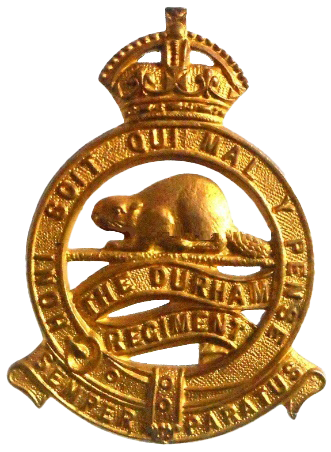
The Durham Regiment
Originated on 16 November 1866, in Port Hope, Ontario, as the 46th East Durham Battalion of Infantry
Redesignated on 1 August 1897, as the 46th Durham Battalion of Infantry
Redesignated on 8 May 1900, as the 46th Durham Regiment
Redesignated on 12 March 1920, as The Durham Regiment
Amalgamated on 15 December 1936, with The Northumberland Regiment and Redesignated as The Midland Regiment (Northumberland and Durham)
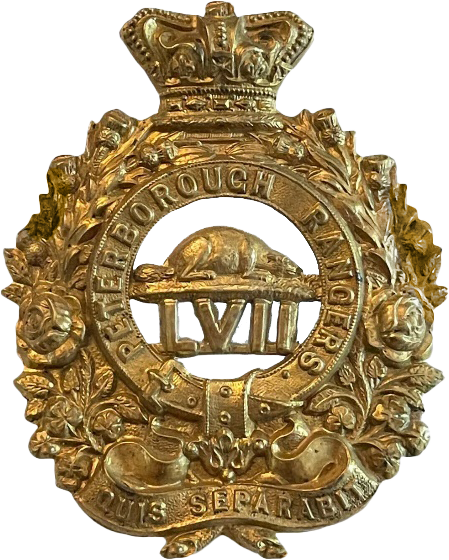
The 57th Regiment Peterborough Rangers
Organized in 1857 as the Peterborough 1st Volunteer Rifle Company
Redesignated 1866 as the 57th Regiment Peterborough Rangers.
Amalgamated in 1936 with the 3rd Prince of Wales Dragoons and C Company 4th Canadian Machine Gun Battalion into the Prince of Wales Rangers (M.G.) Peterborough Regiment.
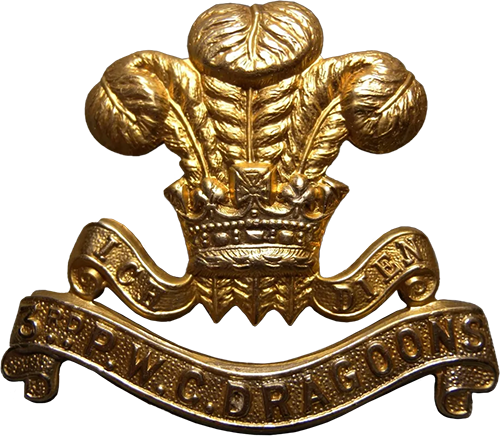
The Prince of Wales Royal Canadian Dragoon Guards Company
Organized in 1833 as the 1st Northumberland Troop of Horse Dragoons
Redesignated on 30 April 1875 as the “Third Cavalry Regiment, The Prince of Wales Royal Canadian Dragoon Guards Company”
1881 redesignated as the 3rd The Prince of Wales Canadian Dragoons
Headquarters moved to Peterborough 27 March 1895
Amalgamated in 1936 with the 3rd The Prince of Wales Canadian Dragoons and C Company 4th Canadian Machine Gun Corps into The Prince of Wales Rangers (M.G.) Peterborough Regiment.
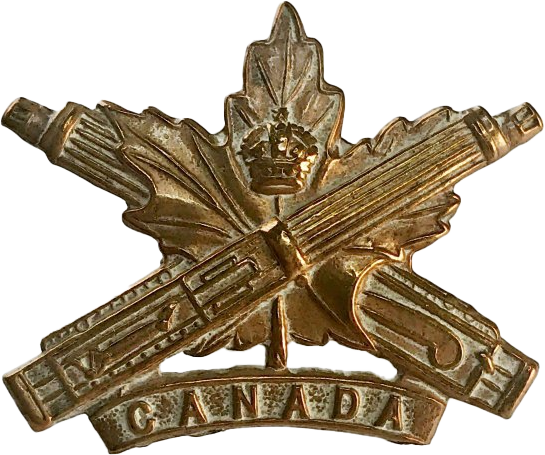
The 4th Canadian Machine Gun Battalion
Organized in Peterborough in 1919 as “C Company, 4th Canadian Machine Gun Battalion”
Name changed in 1924 to 4th Machine Gun Battalion
Amalgamated in 1936 with the 3rd Prince of Wales Dragoons and 4th Canadian Machine Gun Corps into the Prince of Wales Rangers (M.G.) Peterborough Regiment

The Prince of Wales Rangers
1946 saw the Prince of Wales Rangers rebadged to artillery along with the 4th Field Battery.
The 50th Heavy Anti-Aircraft Regiment, RCA took their place.
In 1950 the Light-Aid Detachment of the 50th HAA Regiment was separated from the unit and became the 28th Technical Squadron RCEME.
1964 saw another reorganization of the Militia. The 50th HAA had been restructured as the 50th Medium AA Regiment but was now evolved into the 50th Field Regiment RCA.
28th Tech Sqn RCEME was restructured into the Ottawa Service Battalion, a new organization in the Army.
In 1970 the 50th Fd Regt RCA was reduced to nil strength, with its officers and men transferred to B Company, the Hastings and Prince Edward Regiment in Peterborough.
The 33rd Medium Regiment, RCA
Formed in Cobourg 1946 combining the 14th and 22nd Field Batteries.
In 1970 reduced to nil strength. Its members were encouraged to join the Hastings and Prince Edward Regiment in Belleville or Peterborough.